- dynamic systems characterized by interdependence, mutual interaction, information feedback, and circular causality
- System Dynamics is useful for better understanding and improving socio-technical problems in the domain of quality, safety, environmental, and regulatory programs and systems
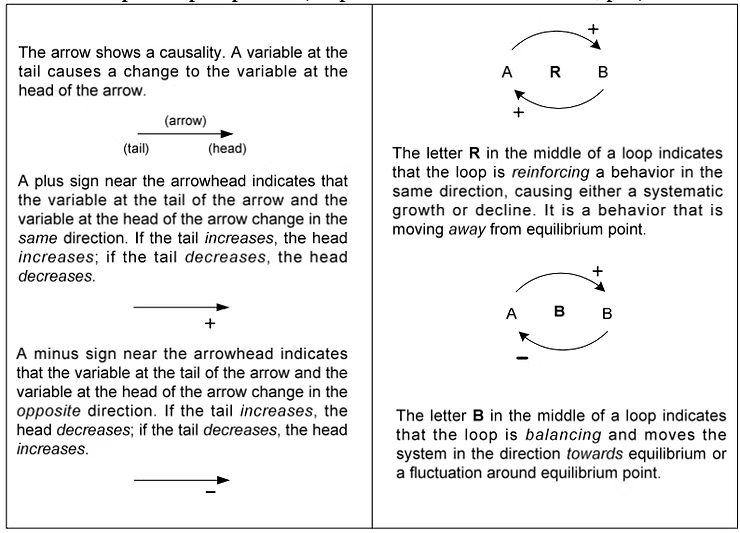
- to more fully understand the past and predict the future a dynamic model is needed that represents the interdependence of system components — this is where causal loops are used
- there are two kinds of causal loops:
- reinforcing
- Negative reinforcing causal loops are called vicious cycles and have unfavourable outcomes
- balancing
- Positive reinforcing causal loops are called virtuous cycles and have favourable results
- Illustration
Vicious circles
- people are easily caught in vicious cycles, they often do not see these cycles as endless spirals and do not know how to escape the dynamic
- available here
- sometimes called Doom looping, it has four steps
- Identify a problem symptom that concerns you because it seems to get worse and worse over time. For example, your symptom might be morale problems.
- Identify three immediate and independent causes of the problem symptom. For example, three immediate causes of morale problems might be a difficult manager, lack of career opportunities, and job pressures and stress.
- Clarify three immediate and independent consequences of the growing problem symptom. For example, three immediate consequences of morale problems are turnover, quality problems, and performance issues.
- Finally, show how at least one of the consequences exacerbates at least one of the causes. The connection might be direct or indirect. For example, the consequence of turnover is that it increases workload for key personnel, which in turn increases job pressures and stress, thereby increasing morale problems and turnover even further. This dynamic is a vicious cycle or, in systems thinking parlance, a reinforcing feedback loop.
Systemic design
- systemic design applies systems thinking to design practice — awareness of feedback loops, unintended consequences, and interdependencies should inform how we frame and solve design problems